•Beau Jonkhout
Applications
Nearly half of bailiff work can be automated: which half?
Which half of a Dutch bailiff's work can AI take over, which half cannot, and what does that mean for your firm? A sober look at the KBvG figures.

Read More
The PrudAI blog: articles on agentic AI, generative AI, AI in law, healthcare and construction. Practical explanations and case studies.
41 articles
Which half of a Dutch bailiff's work can AI take over, which half cannot, and what does that mean for your firm? A sober look at the KBvG figures.
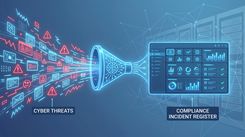
Since August 15, 2026, the Cyberbeveiligingswet (NIS2) has been in effect. As organizations must now report their first significant incidents within 24 hours, bottlenecks in qualifying threats are emerging. How can you streamline this reporting process?
BEVER put the 2027 draft budget next to the 2026 one and read the explanatory memorandum on the Municipalities Fund. The fund grows to € 49.96 billion, youth care and Wmo appear nowhere as separate lines, climate money for municipalities runs out after 2027 and the fund declines from 2028. With ten questions for the council debate in November, every figure traceable to a budget line or parliamentary paper.
Now that the Dutch Cyberbeveiligingswet (NIS2) has been in effect for a month, the focus around cybersecurity is definitively shifting to the boardroom. How do you prove you meet the duty of care and mitigate personal liability?

A Dutch trend monitor among 799 tax professionals shows AI has become a daily tool, while 88% name trust in its output as the largest barrier. Why verifiability matters more than speed.

The NOvA published recommendations on AI in legal practice in December 2025. The disciplinary court did not even need them: in July 2026 it imposed a reprimand on the basis of the existing core values, after references to non-existent rulings from an AI tool ended up in court documents.

In 2026, the AP and the EDPB strongly warn against 'puzzle identification' in Woo decisions. Municipalities must demonstrate they anonymize unique contextual traits, not just names. Traditional methods fall short in this regard.

The NOvA issued recommendations on AI use in December 2025, and in 2026 the supervisors are still exploring how to supervise that use. The concrete risk already sits with the disciplinary court: in July 2026 a reprimand followed after references from an AI tool turned out to point to rulings that do not exist.

Since the Cyberbeveiligingswet (Cbw) took effect on August 15, 2026, supply chain liability has tightened. Discover how the AI assistant LEO helps corporate lawyers effectively update vendor agreements.

With the Cbw in effect since August 15, 2026, CISOs are wrestling with the classification of security incidents. Discover why high-impact 'near-misses' belong in your internal register and how IRMA automates compliance.
In 2026, Dutch municipalities face massive backlogs processing Open Government Act (Woo) requests. By intelligently configuring automated anonymization, public organizations save thousands of hours while guaranteeing strict compliance with the Dutch Data Protection Authority (AP).
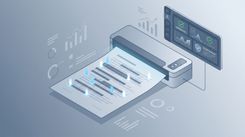
The NOvA recommendations ask lawyers to check AI output themselves; responsibility stays with the lawyer. In complex personal injury cases that means a verifiable trail from source to conclusion.

Under the Cyber Security Act (Cbw), all essential and important entities are required to register in the new national entity register. Failure to register can lead to immediate fines. How do you get your compliance data in order on time?
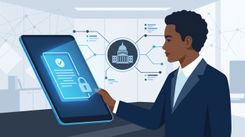
Since August 15, 2026, the Dutch Health and Youth Care Inspectorate (IGJ) has proactively supervised digital resilience. Discover why 90% of mental healthcare institutions are not yet compliant and how executives are transitioning to continuous, AI-driven NEN 7510 audits.

Under the Cyber Security Act (Cbw), data retention has evolved from a GDPR checkbox into an essential strategy for reducing your attack surface. Learn how law firms can automate their DMS cleanup before the audit.
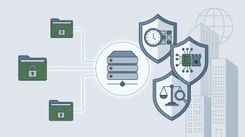
AI assistants do not fix outdated documentation; they present inaccuracies fluently as absolute truth. Why structural information alignment is crucial for responsible AI adoption.

In December 2025 the Dutch Bar Association (NOvA) published recommendations on responsible AI use in legal practice, built on the core values of the profession. In its 2026 work plan, the Supervisory Board (College van Toezicht) puts AI use on the agenda with the local deans. How do you show that confidentiality and expertise are safeguarded when your firm uses AI?
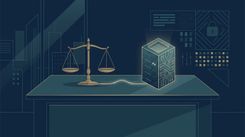
Since August 2, 2026, the transparency obligations of the EU AI Act are fully applicable. Organizations must label their AI interactions and output. What does this mean for your business operations?

In 2026, the Dutch Health and Youth Care Inspectorate (IGJ) is strictly enforcing Wabvpz logging requirements. With manual log reviews becoming unsustainable, healthcare providers are turning to AI audits to effectively prevent unauthorized access to electronic health records.

With the Cybersecurity Act coming into effect on August 15, organizations are explicitly responsible for the security of their supply chain. What do the NIS2 supply chain requirements mean for your software vendors, and how do you handle these audits efficiently?
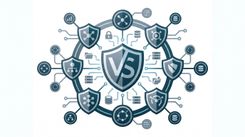
AI agents are fully operational in many organizations, but their underlying data remains fragmented. With the EU AI Act transparency rules and Cybersecurity Act arriving in August 2026, a centralized data foundation is no longer optional.
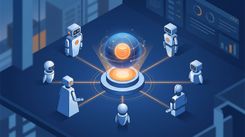
AI assistants often invent non-existent ECLIs. We built rechtspraak-mcp: an open-source connector that pulls real Dutch rulings from the official Rechtspraak Open Data into any AI assistant.
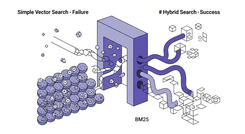
Standard cosine similarity on embeddings fails for complex technical queries. I break down why we integrated BM25 and Cohere Rerank into our RAG pipeline.
As the 2026 deadlines for high-risk AI systems (Annex III) relentlessly approach, focus is shifting from policy to the hard reality of EU AI Act compliance audits. What does this mean for your organization and how should you prepare?

New data from March 2026 shows that agent-to-agent negotiations are reducing procurement cycles in the manufacturing sector from weeks to hours. Discover how autonomous procurement agents are redefining the buyer's role.

The European Commission withdrew its proposal for an AI Liability Directive in 2025, so there will be no separate EU liability regime for AI. From 9 December 2026, however, the revised Product Liability Directive applies, and it treats software explicitly as a product. For executives, demonstrable control over AI agents therefore remains the best defence.

Most organizations have seen enough pilots by now. The next question is more grounded and more important: where does AI create measurable value, how should that value be tracked, and how do you avoid confusing a strong demo with structural return?
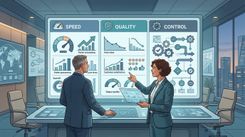
The AI-enabled organization is not just about tools. It requires new work design, new team rhythms, and leadership that intentionally combines human expertise with agentic systems.

Public organizations want to use AI to make services faster, more consistent, and more accessible. The challenge is doing that without weakening explainability, human accountability, or data protection.

In manufacturing, engineering, and construction, AI is moving from isolated analysis to direct support for planning, quality control, and operational decisions. Digital twins are increasingly becoming the layer that ties that together.

Private AI is no longer only about security. For European organizations, the choice increasingly revolves around continuity, data control, explainability, and the ability to deploy AI without becoming dependent on one public environment.
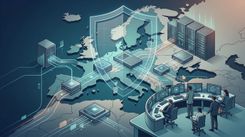
Many organizations are experimenting with AI, but far fewer are turning that activity into scalable process improvement. That requires different design choices in workflows, governance, integration, and leadership.

AI literacy is no longer a soft side topic. Organizations that deploy AI need to show that employees, managers, and administrators understand how the system works, where the risks are, and how human oversight should operate.

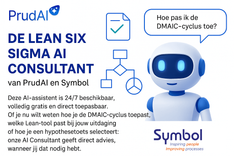
At PrudAI, we develop intelligent AI solutions that make organizations smarter and more effective. Together with Symbol, an authority in the field of Lean Six Sigma, we have developed a new product: the Lean Six Sigma AI Consultant.
As an AI coach and AI implementation partner, I see organizations working with AI along two tracks. On one hand, copilots help people within a task step through a prompt (writing, summarizing, classifying). On the other hand, agentic AI: software 'colleagues' that independently translate goals into plans and actions, with quality controls and integrations. The second category provides the greatest added value.
Since beginning this year at PrudAI, much has happened. What began as a compact initiative with a clear mission – to make AI accessible and responsibly used for businesses and governments – has now grown into an organization with powerful products, deep expertise, and a vision that aligns with the challenges of our time.
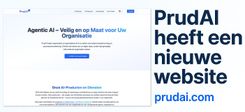
Large Language Models (LLMs) are revolutionizing how we interact with information, but they have inherent limitations. To address these challenges, two powerful methodologies have emerged: Retrieval-Augmented Generation (RAG) and the Model Context Protocol (MCP). While distinct, their true potential is unlocked when used in tandem, creating AI systems that are not only knowledgeable but also capable of taking meaningful action.
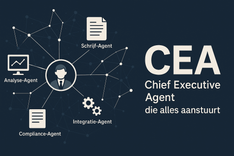
AI agents are emerging as the digital colleagues of the future. They independently perform tasks, communicate with systems and people, and are available 24/7. But what exactly are agents? And how do they truly help organizations – and you as an employee – move forward? As an AI coach at PrudAI, I often explain it like this: "An agent is like a regular employee, but virtual." In this blog, I explain how agents work, what they can do, and how multiple agents can function together as a virtual organization with one digital leader: the Chief Executive Agent (CEA).
AI is no longer a thing of the future. More and more organizations are using it to speed up work, reduce errors, and support employees. In this blog, I will show where AI truly adds value today: from support departments to policy development, and how the latest generation of agentic AI is reshaping our way of working.
Generative AI has quickly become a key concept. From automatically writing reports to generating images, code, or even policy texts: this technology seems capable of anything. But how does it actually work? What happens under the hood of tools like ChatGPT or Claude? As a senior AI coach at PrudAI, I help organizations apply generative AI responsibly and effectively on a daily basis. In this blog, I explain in an understandable way what generative AI is, how Large Language Models (LLMs) work, and why it's important to know what you're doing.
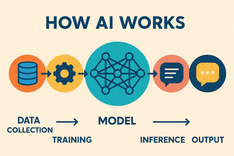
The rise of generative AI offers enormous opportunities. But many organizations – especially in the public sector, healthcare, and finance – rightly ask the question: "Is AI safe enough for our sensitive data?" The short answer: yes, provided you maintain control over your data and infrastructure. In this blog, I explain how to do that with so-called Private AI solutions, where the LLM (Large Language Model) acts purely as a processor – not as the owner of your data. As an AI coach at PrudAI, I guide organizations that want to use AI without compromising on privacy, security, or compliance. The key? Understanding where the risk lies and how to make it manageable.