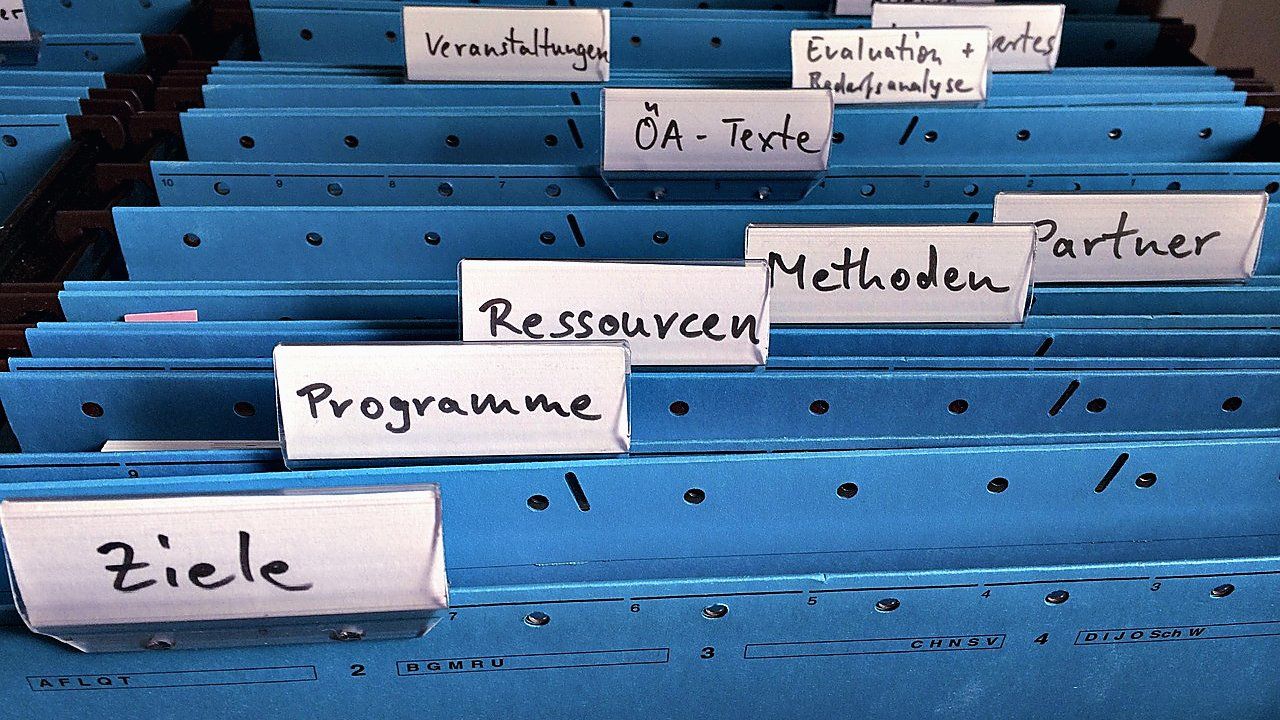
In 2026, AI agents have become an operational reality in many organizations. They handle customer support, verify documents, and draft purchase orders. Yet, while the intelligence of these agents has scaled significantly, their foundation remains remarkably fragile. Corporate data is often scattered across wikis, shared mailboxes, legacy document management systems, and isolated chat logs.
Humans might be able to navigate this ambiguity, but for AI agents, such fragmentation is disastrous. An agent forced to pull instructions from three conflicting systems will inevitably make mistakes or hallucinate.
Two rules that apply since August 2026
Since August 2026, two rules make solving this data challenge acute. Since 2 August 2026 the transparency obligations under Article 50 of the EU AI Act apply. Since 15 August 2026 the Dutch Cybersecurity Act (Cyberbeveiligingswet) applies, with strict 24-hour incident reporting.
Both regulations require a level of control that many organizations currently lack. You can only be transparent about AI operations or report a breach within 24 hours if you know exactly where your information resides and who (or what) has access to it. This reality forces organizations to abandon floating spreadsheets in favor of a structural, fully controlled foundation.
Learning from the public sector: Knowledge Graphs
Interestingly, it is the Dutch government that leads in this area, having already institutionalized these architectural lessons. Frameworks like the Dutch Government Reference Architecture (NORA) and practical implementations such as the Kadaster Knowledge Graph demonstrate how to objectify and unambiguously unlock data (adhering to the FAIR principles). Many commercial enterprises still lag behind, trapped in an unmanageable 'scatter crisis'.
The practice: one fact, one place
At Prudai we work with AI agents every day, alongside our people. For our AI Services, we enforce a strict information management protocol rooted in daily operational practice, not just theory.
Our golden rule: there is only one canonical source per fact. We use strictly typed data stores and enforce rigorous lifecycle management. Information is never duplicated; instead, it 'graduates' from a temporary status to a definitive canonical source as its certainty increases, backed by a fixed hygiene cadence. As a result, LEO, VERA, ZIA, BEVER and IRMA work on one shared registry of more than a hundred validated sources.
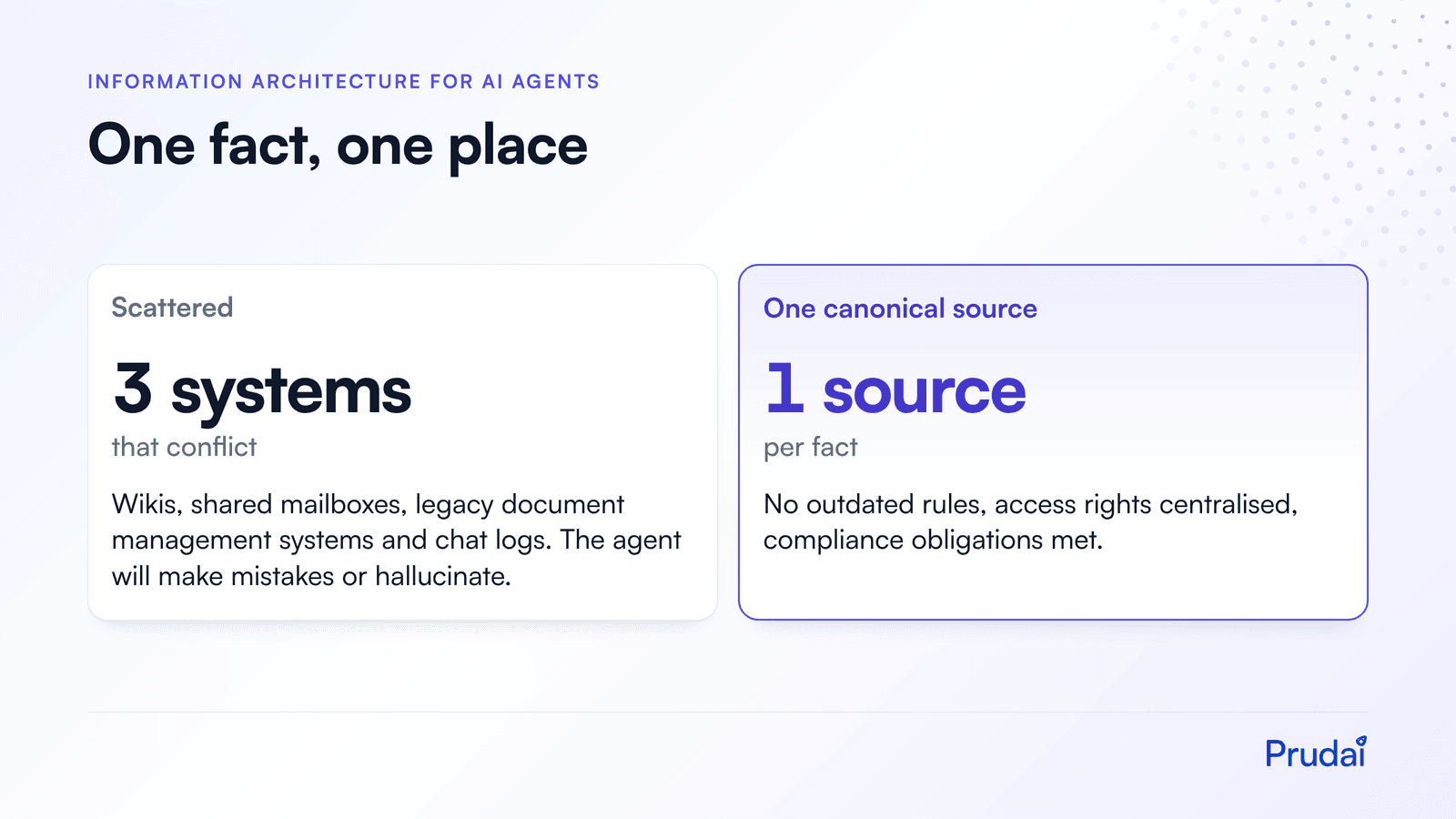
Comparison: scattered information in three conflicting systems, which makes an agent err, versus one canonical source per fact.
How an agent then finds the right passage in such a source, and why we moved from vector search alone to hybrid search, is covered in Beyond vector search: hybrid search.
By securing information in one single place, we prevent agents from applying outdated rules, centralize access rights, and seamlessly meet compliance obligations. "One fact, one place" is the only scalable route to building a reliable, agent-driven organization.
What such an organization further asks of teams and leaders, from agreements on review to a working operating model, is covered in The AI-enabled organization in 2026.
Sources
- Dutch Government Reference Architecture (NORA): the Dutch government's interoperability framework
- Kadaster Knowledge Graph: a working example of unambiguously published government data
- FAIR principles (GO FAIR): Findable, Accessible, Interoperable, Reusable
- Forum Standaardisatie: the Dutch register of mandatory open standards
Would you like to know how we can structure your data landscape to ensure your organization safely meets the rules that apply since August 2026, or do you want to explore our approach to AI agents directly? Contact us for a pragmatic conversation about your information architecture.