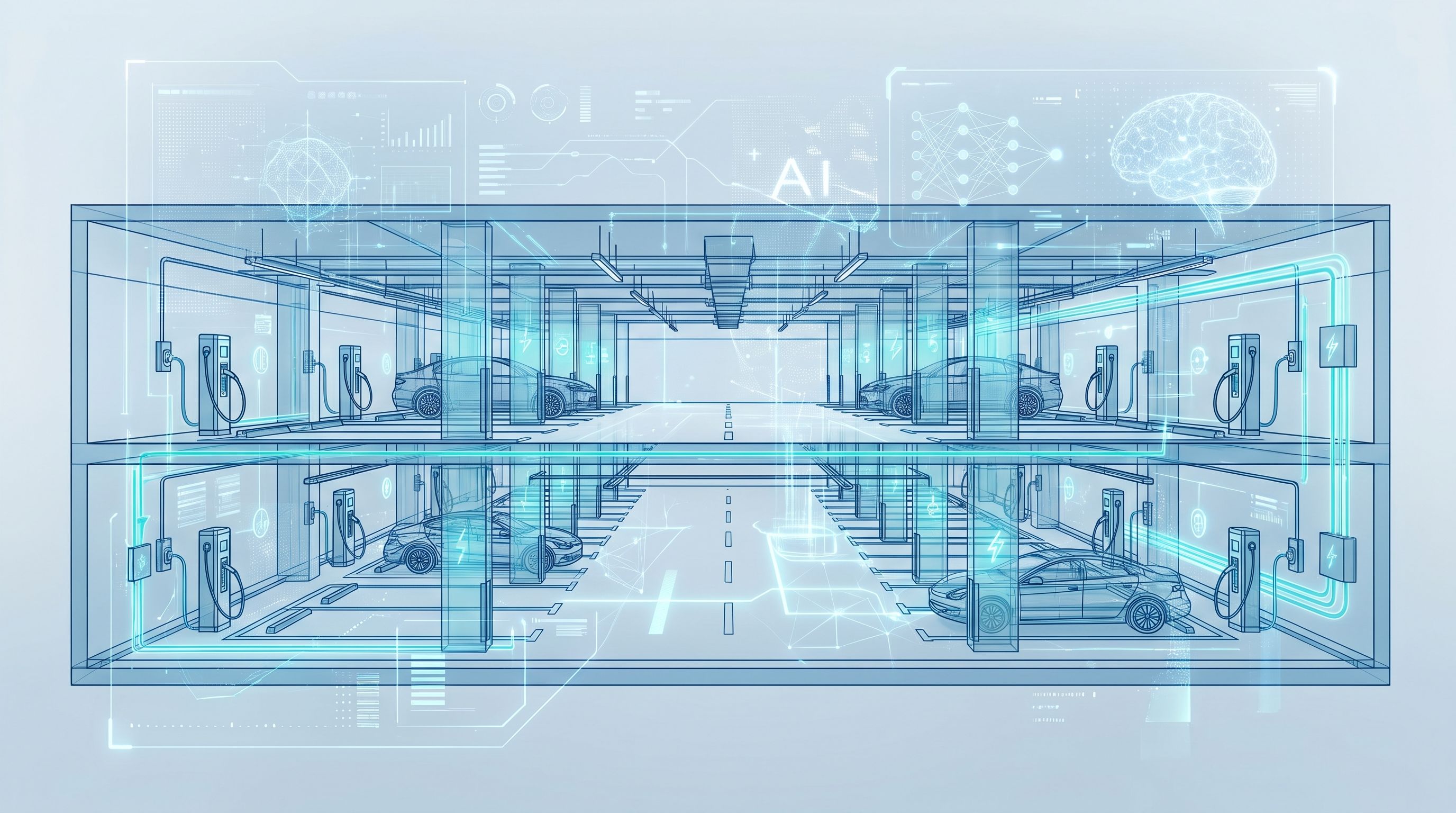
With the implementation of the new EPBD IV directive on May 29, 2026, the construction industry faces a significant challenge. The translation of these European rules into the Dutch Environment and Planning Act (Bbl) forces construction parties to apply stricter safety requirements to EV charging infrastructure in new builds and renovations. The growing number of electric vehicles in indoor spaces adds extra complexity. When it comes to the specific Dutch compliance focus of 'bbl 2026 laadpalen parkeergarage brandveiligheid' (Bbl 2026 EV chargers parking garage fire safety), the legislator now demands ironclad guarantees before a building can be commissioned.
For quality assurers operating under the Quality Assurance for Building Act (Wkb), manually validating these specific design requirements is hardly feasible anymore.
Why manual checks fall short
The Netherlands Institute for Public Safety (NIPV) has long emphasized the safety risks of battery fires in enclosed parking facilities. A burning electric vehicle is notoriously difficult to extinguish and requires specific structural and installation provisions. Therefore, the Bbl has imposed strict rules since May 29, 2026. This includes the mandatory use of Mode 3 or Mode 4 charging points in accordance with NEN 1010. Article 4.230a of the Bbl is equally crucial: it mandates a central shut-off mechanism, such as an emergency button, to de-energize all charging points simultaneously during an emergency. Furthermore, the exact location of the chargers must be immediately visible at the entrance.
Supervision of these rules is unforgiving, and the delivery file must be constructed flawlessly. In practice, we see the severe risks of compliance failure, for example in the complications of taking over a project from a suspended quality assurer. An incomplete check of fire safety requirements inevitably leads to postponed building delivery.
The shift to AI-driven validation
In an average construction project, technical specifications, installation drawings, and reports easily span thousands of pages. Manually checking whether the charging facilities in a parking garage exactly meet the updated requirements is slow and prone to errors.
This is where specialized AI applications offer a solution. Instead of reactive spot checks, autonomous AI systems verify construction drawings directly against current legislation. The system automatically validates:
- Whether the required number of charging points, for example at least one in five spots for new buildings, complies with Bbl standards.
- Whether the necessary central shut-off infrastructure is explicitly detailed on the electrotechnical drawings.
- Whether the positioning of the charging points aligns with NIPV safety regulations.
By having AI audit these complex installation requirements during the design phase, contractors avoid high failure costs. At the same time, quality assurers gain the certainty that their completion file is instantly watertight.
Would you like to know how our AI Services and specialized agents can help your organization flawlessly validate complex legislative requirements? Contact us today via our contact page for a demonstration, ensuring your compliance is immediately scalable and future-proof.