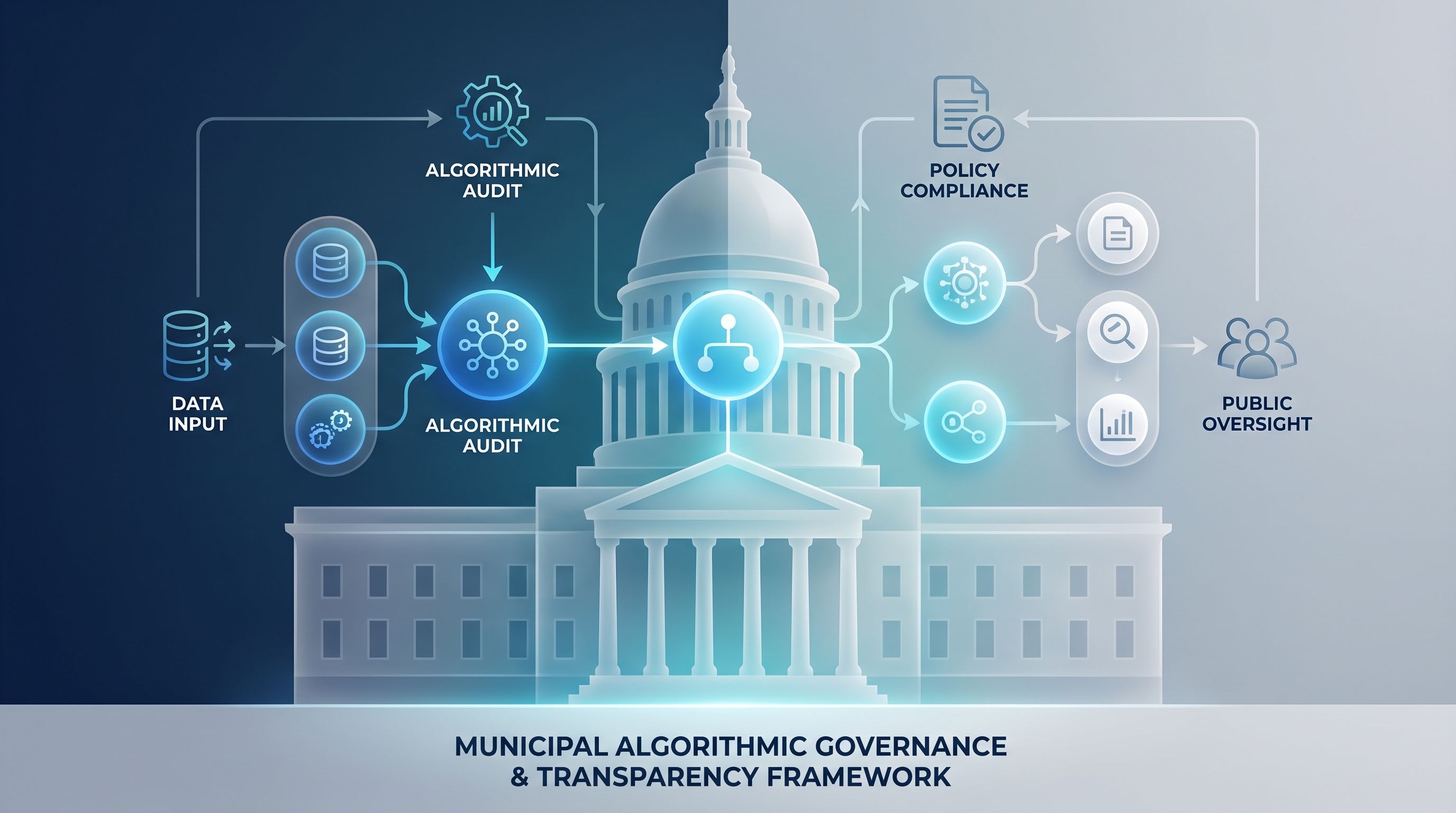
Since August 2026, the Dutch Data Protection Authority (AP) has structurally tightened its supervision of government algorithms. For municipal operations, this means a strict requirement: an Algorithm Impact Assessment (IAMA) must be submitted for every new decision-making algorithm. This accountability guarantees that the technology is safe, fair, and verifiable. However, drafting this extensive documentation proves to be a heavy administrative burden for many departments in practice.
Executing a municipal algorithm impact assessment correctly and on time is no longer a non-committal exercise. Due to growing legal pressure and political interest, public organizations are looking for standardized solutions to structure their compliance efficiently.
Stricter requirements for municipalities
The introduction of the European AI Act and the obligation to publish systems in the national Algorithm Register force municipalities to be fully transparent. Where a brief internal risk assessment might have sufficed previously, the AP now demands detailed insight into the inner workings and weightings of the model used. Decision-making algorithms that affect the allocation of subsidies, fraud detection, or the distribution of social facilities fall directly under the strictest supervision.
In the current operational practice of September 2026, we notice that many processes are stagnating. Just as administrators struggle with the qualification of incidents under the Cyberbeveiligingswet, data teams experience bottlenecks when translating technical algorithm choices into clear legal IAMA documentation. Manually logging every parameter and decision rule is highly error-prone and costs an unnecessary amount of man-hours.
Automated IAMA documentation with BEVER
To prevent the development of necessary applications from stalling due to regulations, smart tooling is essential. Within our AI Services, the application 'BEVER' now plays a crucial role for the public sector. BEVER is specifically designed to make automated decision-making transparent, traceable, and above all, audit-proof.
The tool supports municipalities by accurately recording how a specific decision was reached during the actual execution of the algorithm. These complex decision trees and variables are directly converted by BEVER into readable documentation. This forms exactly the evidence that the AP requires during an audit. In this way, BEVER helps municipalities to keep the Algorithm Register up-to-date, without overburdening data specialists with compliance tasks.
Transparency as a foundation for trust
Meeting regulatory frameworks is only the beginning. The fundamental goal of an IAMA is to safeguard citizens' trust in a digital government. By standardizing the documentation process around algorithms with BEVER, you as a municipality prove that technological innovation goes hand in hand with due care and legal certainty.
Sources
- Dutch Data Protection Authority: AP sets requirements for algorithm use
- Digital Government: Algorithm Register
- EUR-Lex: AI Act Regulation
Would you like to know how BEVER can support your municipality in 2026 in streamlining your IAMA audits and creating verifiable decision-making? Contact us via the contact page and discover how you can immediately comply with the stricter AP requirements.