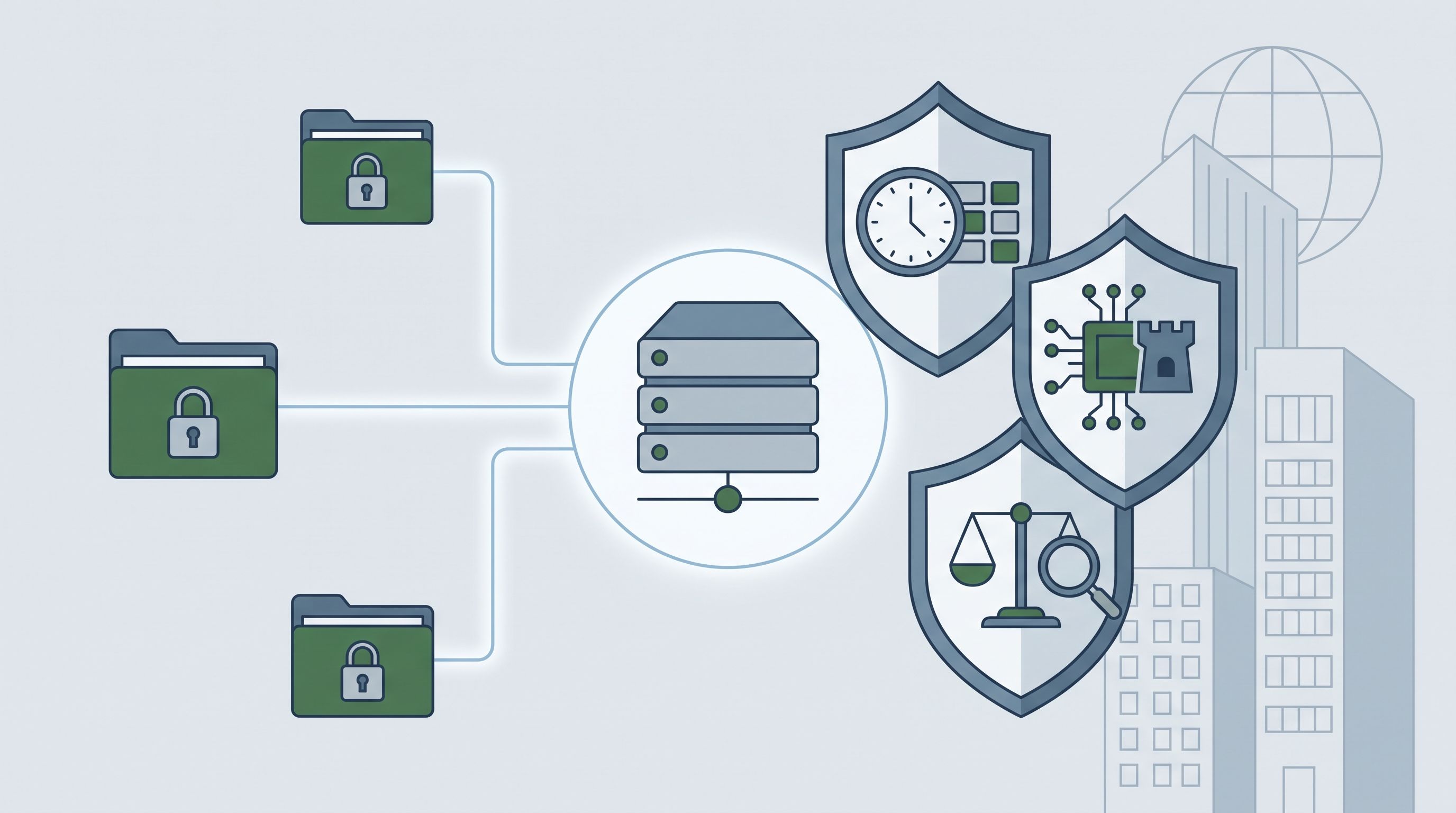
Since the Cyber Security Act (Cbw)—the Dutch implementation of the NIS2 directive—came into effect on August 15, information security standards have drastically increased. While data retention was previously viewed primarily as an administrative obligation under the GDPR, it now forms a vital component of your active defense perimeter.
For executives and IT managers, the NIS2 data retention requirement dictates that they must proactively reduce their attack surface. After all, unnecessarily retained data is not a dormant archive; it represents an active security vulnerability.
The Attack Surface in the Legal Sector
In the legal and professional services sectors, the Document Management System (DMS) often serves as a digital dumping ground where client files sit untouched for decades. In the event of a cyber incident, such as a ransomware attack or data breach, the 'blast radius'—the actual operational impact of the incident—is directly tied to the volume of accessible data.
The more outdated files you retain, the greater the potential damage and the heavier the reporting burden to regulators. The Cyber Security Act demands demonstrable risk mitigation and structural supply chain security audits under its duty of care. During an upcoming NIS2 audit, a cluttered DMS will serve as a direct indicator that basic data governance hygiene is lacking.
Automated Enforcement: Bridging ORDO and IRMA
Manually cleaning up a DMS or archive is practically unfeasible. Lawyers do not have the time to check the legal retention period for every single document, and the risk of human error is simply too high. This is why information alignment between your documented policy and actual practice is crucial.
The solution for law firms lies in the automated integration between your DMS (such as ORDO) and your GRC platform (such as IRMA). By linking ORDO and IRMA, retention policies are not merely documented on paper, but actively enforced in practice. When a file's retention period expires according to the GRC guidelines in IRMA, it automatically triggers secure archiving or destruction within ORDO.
This automation bridges the gap between theory and execution. It significantly lowers management costs and provides regulators with irrefutable evidence that your firm complies with the latest requirements of the Cyber Security Act.
Sources:
- Digital Government - Cyber Security Act in effect as of August 15
- National Cyber Security Centre (NCSC) - Duty of Care under NIS2
- Dutch Data Protection Authority - Security of Personal Data
Would you like to know how the integration between ORDO and IRMA helps your firm automatically comply with NIS2 data retention requirements and accelerates your audit readiness? Get in contact with us for a demonstration of this integration and operational control.